
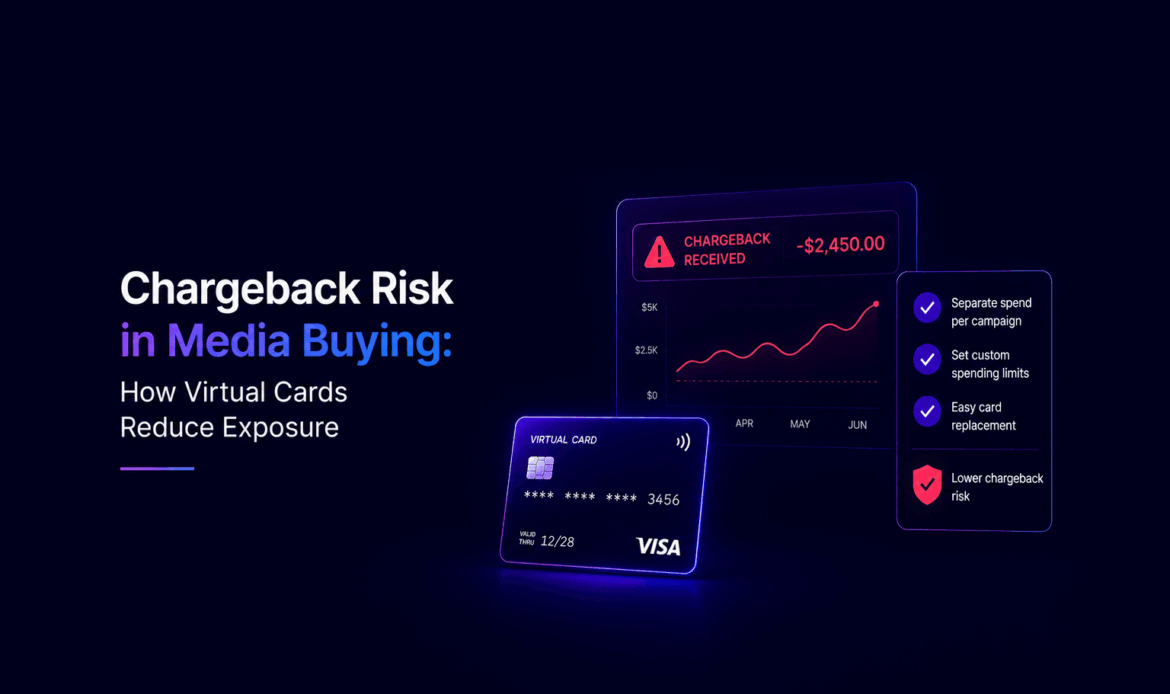
Chargebacks are an unavoidable part of digital payments, but for media buying teams, agencies, and affiliate marketers, they can create serious operational and financial challenges. Unexpected payment disputes may interrupt advertising campaigns, complicate accounting, and increase administrative costs.
While chargebacks cannot always be prevented, a well-designed payment infrastructure can significantly reduce financial exposure and make disputes easier to manage.
Virtual cards have become one of the most effective tools for improving payment security, separating advertising budgets, and minimizing the impact of chargeback-related issues.
In this guide, we’ll explain how chargebacks affect media buying operations and how virtual cards help reduce payment risks in 2026.
What Is a Chargeback?
A chargeback is a payment reversal initiated by the cardholder’s bank after a dispute has been raised.
Chargebacks were originally introduced to protect consumers against unauthorized or fraudulent transactions. Today, they remain an important part of the global card payment ecosystem.
For advertisers, chargebacks may lead to additional investigations, delayed settlements, and increased administrative work.
Do Media Buyers Face Chargeback Risks?
Media buyers rarely initiate chargebacks themselves when paying advertising platforms. However, payment disputes and billing issues can still affect advertising operations.
Typical situations include:
- Duplicate advertising charges
- Unexpected billing adjustments
- Subscription renewals
- Incorrect payment amounts
- Disputes over advertising invoices
In addition, agencies managing client advertising budgets may occasionally need to investigate disputed transactions or reconcile unexpected billing activity.
Why Payment Organization Matters
When multiple advertising accounts share the same payment method, resolving billing questions becomes significantly more difficult.
If dozens of campaigns use one card, identifying the source of a disputed transaction may take hours.
Professional media buying teams reduce this complexity by separating payments across dedicated virtual cards.
How Virtual Cards Reduce Financial Exposure
Virtual cards cannot eliminate chargebacks, but they help limit the operational impact.
Using separate virtual cards allows teams to:
- Isolate advertising budgets
- Separate client expenses
- Track every transaction
- Simplify payment investigations
- Improve financial reporting
If a billing issue occurs, only the affected card needs to be reviewed instead of the entire payment infrastructure.
Learn more in What Is a Virtual Card? A Detailed Guide.
Improving Transaction Visibility
One of the biggest advantages of virtual cards is transaction transparency.
Each advertising account, campaign, client, or media buyer can have its own dedicated payment method.
This allows finance teams to quickly identify:
- Where a payment originated
- Which campaign generated the charge
- Which client budget was affected
- Whether the transaction was expected
Clear transaction records significantly reduce the time required for internal investigations.
Reducing Operational Risk
Payment issues should never interrupt unrelated advertising campaigns.
By assigning separate virtual cards to different advertising accounts, affiliate offers, or clients, teams isolate operational risks.
Even if one payment requires investigation, the remaining advertising infrastructure continues operating normally.
Better Budget Protection
Virtual cards allow advertisers to combine payment separation with spending limits.
By setting individual limits for each card, teams can:
- Prevent excessive spending
- Reduce financial exposure
- Control campaign budgets
- Protect client funds
Learn more in How to Set Spending Limits on Virtual Cards and Protect Your Ad Budget.
Supporting Financial Reconciliation
When finance teams reconcile advertising expenses, dedicated virtual cards make the process considerably faster.
Instead of reviewing thousands of mixed transactions, accounting teams can reconcile expenses card by card.
This reduces reporting errors and simplifies monthly financial reviews.
Building a Safer Payment Infrastructure
Professional media buying teams typically combine several best practices:
- Dedicated virtual cards
- Separate client budgets
- Real-time transaction monitoring
- Custom spending limits
- Structured financial reporting
Together, these practices improve financial control while reducing operational complexity.
How Spending.market Helps Reduce Payment Risks
Spending.market provides virtual cards built specifically for media buyers, affiliate marketers, and advertising agencies.
With Spending.market, teams can:
- Issue unlimited virtual cards
- Separate campaign budgets
- Monitor transactions in real time
- Set spending limits
- Improve financial reporting
- Scale payment infrastructure securely
The platform supports Facebook Ads, Google Ads, TikTok Ads, X Ads, and other major advertising platforms.
Learn more in Best Virtual Cards for Media Buying.
Chargeback Risk Starts with Payment Organization
Chargebacks and payment disputes are part of modern digital payments, but they don’t have to disrupt advertising operations.
Virtual cards help media buying teams organize budgets, improve transaction visibility, simplify financial investigations, and reduce operational exposure when payment issues occur.
A structured payment infrastructure is one of the most effective ways to protect advertising budgets while supporting long-term business growth.
Build a More Secure Advertising Payment System
Issue virtual cards, organize advertising budgets, and strengthen your payment infrastructure with Spending.market.