
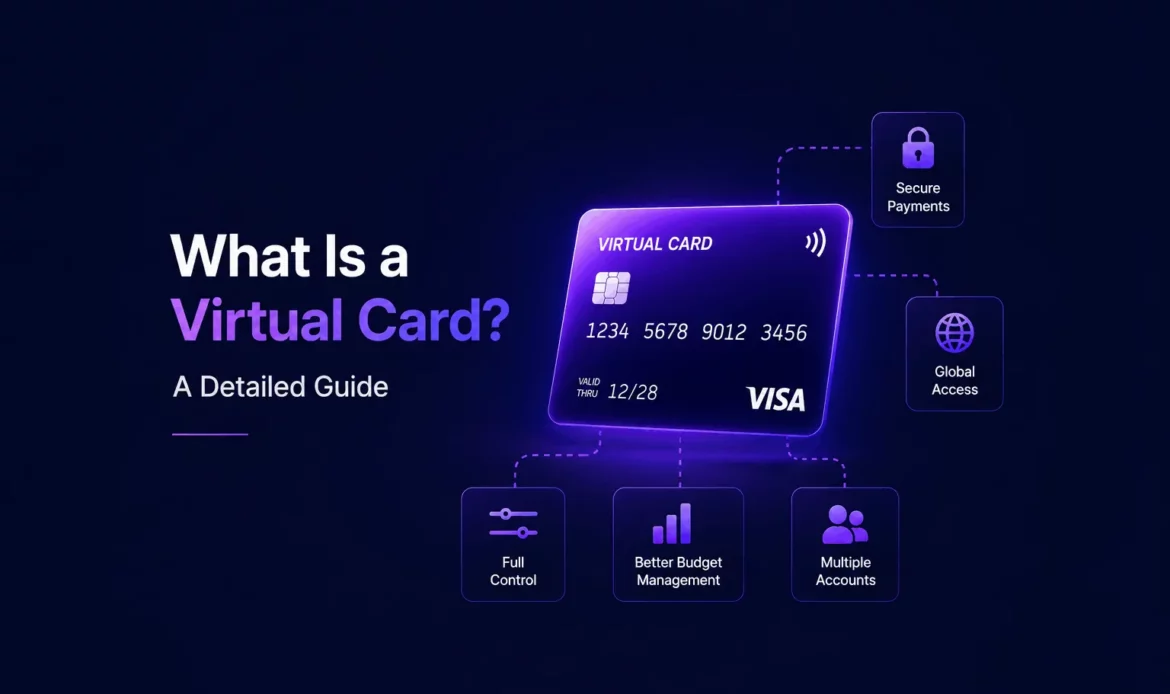
What is a virtual card? It is a payment card that exists only as data: a card number, an expiry date and a CVV, with no plastic behind them. You see the details in an app or a web dashboard and pay online with them exactly as you would with a physical card. For the shop on the other side, the payment looks like any other card payment.
This guide explains how a virtual card works from the moment it is issued to the moment a payment is approved, which types exist, how a virtual card differs from a plastic one, where it is useful and where it is not, and how to get one for personal or business use.
Contents
- What Is a Virtual Card: A Short Definition
- How a Virtual Card Works
- Types of Virtual Cards
- Virtual Card vs Physical Card
- Where Virtual Cards Are Used
- Limitations Worth Knowing
- How to Get a Virtual Card
- Summary: What Is a Virtual Card in Practice
What Is a Virtual Card: A Short Definition
A virtual card is a card account issued by a bank or a licensed payment provider without a physical carrier. It has the same three details that any online checkout asks for:
- a card number of 16 digits, where the first digits (the BIN) identify the issuer;
- an expiry date;
- a three-digit CVV security code.
There is no chip, no magnetic stripe and no envelope in the mail. The card appears in your account within seconds or minutes after you request it, and it can be closed just as quickly. That speed is the main practical difference from plastic, and most of the use cases below follow from it.
How a Virtual Card Works
Behind every virtual card there is an issuer and a source of money. In most cases the source is a balance that you top up in advance; some banks also issue virtual cards linked to a credit line. The payment itself goes through the same steps as a payment with a plastic card:
- You request a card in the app or dashboard and receive the number, expiry date and CVV.
- You enter these details on a website, in a subscription or in a billing section of an online service.
- The merchant sends an authorisation request through the card network to the issuer.
- The issuer checks the balance, the card status and its own risk rules.
- The issuer approves or declines the payment, and the merchant sees the result in seconds.
Two things follow from this. First, the card works only while there is money behind it, so a prepaid virtual card cannot take you into debt. Second, the merchant judges the card partly by its issuer: the BIN tells it which bank or programme the card comes from. Why that matters for approval rates is covered in Why BIN Quality Decides Your Ad Payment Approval Rate.
Types of Virtual Cards
Single-Use Cards
A single-use card works for one payment and then expires. It is convenient for a one-off purchase from an unfamiliar shop: even if the details leak, nobody can charge the card again. It is a poor fit for subscriptions and anything that bills you repeatedly.
Multi-Use Cards
A multi-use card stays active until you close it. It is the right choice for recurring charges: software, hosting, cloud services and advertising platforms that bill the card automatically. Most business virtual cards are of this type.
Prepaid, Debit and Credit Virtual Cards
A prepaid card spends a balance you have funded in advance. A debit card is tied to a current account. A credit virtual card spends the bank’s money within a credit limit. For business payments prepaid cards are the most common, because spending can never exceed the funded amount.
Personal and Business Cards
Many retail banks let customers create a virtual copy of their card or an extra card in the banking app, usually one or a few per person. Business-oriented providers work differently: a company tops up one balance and issues dozens or hundreds of cards from it, one per supplier, project or account.
Virtual Card vs Physical Card
| Virtual card | Physical card | |
|---|---|---|
| Issuance | Seconds or minutes | Days, delivery by post or in a branch |
| Where it pays | Mainly online | Online and in shops |
| Number of cards | Many cards from one balance at specialised providers | Usually one or two per person |
| If details leak | Close the card and issue a new one | Block the card and wait for a replacement |
| Risk of loss or theft | No plastic to lose | Plastic can be lost or stolen |
A virtual card is not better in every situation. It cannot be used at an ATM, and paying in a shop is possible only if the issuer lets you add the card to a phone wallet. For online payments, though, it does everything a plastic card does and adds the ability to issue and close cards on demand. A detailed comparison for ad payments is in Virtual Cards for Advertising vs Traditional Bank Cards.
Where Virtual Cards Are Used
- Subscriptions and software: a separate card for each service makes it easy to cancel by closing the card.
- Online purchases from unfamiliar shops: the main card details stay private.
- Business expenses: each project, supplier or employee gets its own card, so spending is easy to trace.
- Travel and bookings made online.
- Online advertising: Meta, Google, TikTok and X charge the card automatically, and many teams keep one card per ad account.
Advertising is the case with the strictest requirements to the card, because platforms charge it without warning and react to every decline. We cover it separately in what a virtual card for advertising is and how it works, and the logic of one card per account in One Card per Campaign: How to Structure Payments for Ad Accounts.
Limitations Worth Knowing
- Some merchants treat prepaid cards with caution or do not accept them for certain services.
- The card needs a funded balance: if the balance is empty, the payment is declined.
- The issuer matters. Cards from a BIN shared by a large number of users can be declined more often by the risk systems of large platforms.
- Not every provider lets you hold many cards, and the fees differ a lot between providers.
How to Get a Virtual Card
For one or two personal cards, your bank’s app is usually enough. When you need many cards for business payments, a specialised provider is a better fit. Before signing up, check the BIN, the pass rate on the services you pay, the issuance speed, the funding methods and the full fee structure; the full list of questions is in How to Choose a Virtual Card Provider: 7 Questions to Ask Before You Sign Up.
At Spending Market we issue virtual EUR cards for ad payments. A card is issued in about 60 seconds on a unique European BIN that is not used by mass-market products. The balance is topped up with USDT, USDC, ETH or a SEPA bank transfer, the minimum deposit is $500, and one client can keep up to 100 cards per IBAN and up to 5 IBANs at the start. Cards are opened and closed in one click.
Summary: What Is a Virtual Card in Practice
A virtual card is an ordinary payment card without plastic: a number, an expiry date and a CVV that you get in seconds and can close at any moment. Single-use cards protect one-off purchases, multi-use cards handle subscriptions and automatic billing, and business providers let you run many cards from one balance. If you need cards for ad platforms, see how it works on our virtual card for Facebook Ads and virtual card for Google Ads pages.